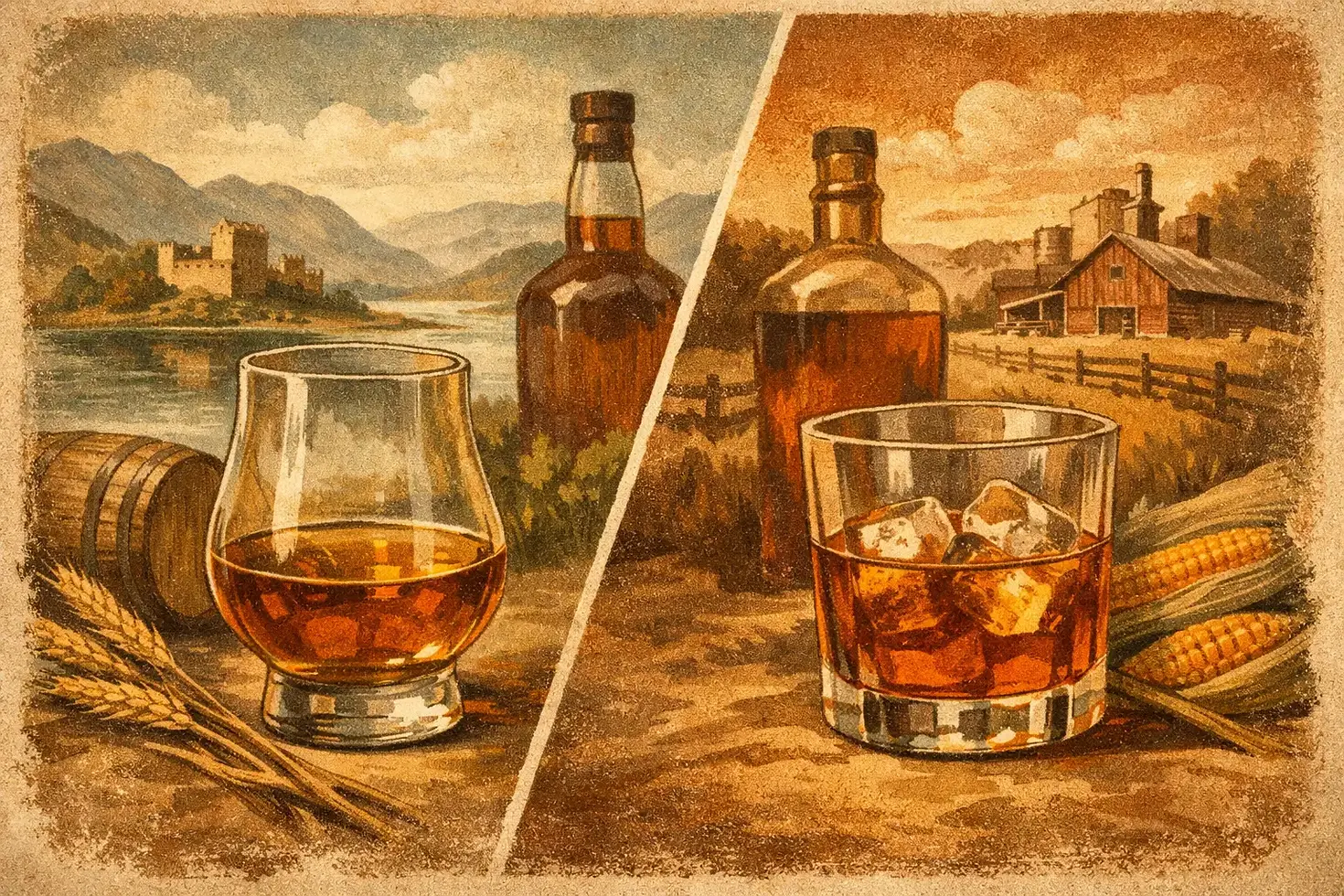
Single Malt vs Bourbon: Which Suits You?

You are at the bar, scanning the shelves, and the big question lands like a challenge coin on the table: single malt vs bourbon. Both have serious character. Both have loyal followers. Both can turn a casual drink into a proper evening. But they are not interchangeable, and if you order one expecting the other, your first sip can be a surprise.
This is where the fun starts. Single malt and bourbon sit in the same broad whiskey family, yet they march in very different boots. One often leans towards orchard fruit, malt, smoke, spice or sherry depth. The other tends to hit with vanilla, caramel, oak sweetness and a fuller corn-led richness. Neither is automatically better. It depends on what kind of night you are having and what sort of dram you want in your glass.
Single malt vs bourbon: the core difference
If you want the cleanest answer, it comes down to ingredients, place and production rules. Single malt is made from 100 per cent malted barley at a single distillery. It is most famously associated with Scotland, though other countries make it too. Bourbon is an American whiskey made from a grain recipe that must contain at least 51 per cent maize.
That single fact changes a great deal. Barley brings a cereal depth that can show off fruit, nuttiness, smoke, spice or maritime notes depending on how it is made and matured. Maize pushes bourbon towards sweetness from the start. Then the cask takes over and turns that sweetness into vanilla, toffee and toasted oak.
There is also the matter of identity. Single malt often wears its distillery character like a regimental badge. Fans talk about region, still shape, water source and cask history. Bourbon can be just as nuanced, but its personality often comes through in the mash bill, char level, warehouse ageing and house style. One is not more sophisticated than the other. They simply tell their stories in different accents.
How single malt is made
Single malt begins with malted barley, water and yeast. That sounds simple enough, but whiskey rarely rewards shallow inspection. The barley is mashed, fermented and distilled, usually in pot stills, before ageing in oak casks for a minimum period depending on the country of production. In Scotland, for example, it must mature for at least three years.
The phrase single malt does not mean it comes from one barrel. It means the spirit comes from one distillery and is made from malted barley alone. Distilleries then shape the final whisky through cask selection, ageing time and blending of different barrels from their own stocks.
This is why single malt can move from light and floral to heavy and smoky with astonishing range. A Speyside style may feel elegant and honeyed. An Islay malt may arrive like a campfire on a wet coast. A sherry cask finish can bring dried fruit and spice. Ex-bourbon casks can add vanilla and coconut. It is a broad battlefield.
How bourbon is made
Bourbon starts with a grain recipe, known as a mash bill, containing at least 51 per cent maize. The rest is typically made up of rye, wheat and malted barley. It must be aged in new charred oak barrels and distilled and matured under specific legal standards in the United States.
That new oak matters enormously. Fresh charred barrels give bourbon much of its signature style - caramel, vanilla, cinnamon, toasted nuts and a darker oak presence than many drinkers expect. Even younger bourbons can taste bold because the cask is doing heavy lifting from day one.
The mash bill changes the profile too. A high-rye bourbon often has more spice and grip. A wheated bourbon can feel softer, rounder and sweeter. So while bourbon is often described as approachable, that does not mean it is one-note. A good bottle can have structure, tension and plenty of bite.
Flavour in the glass
This is where single malt vs bourbon becomes less about rules and more about mood. If you like layered, evolving aromas that shift as you sit with the glass, single malt often excels. You might get green apple, heather honey, toasted cereal, pepper, sea salt, smoke, leather or dark fruit depending on the style.
Bourbon usually comes out with more immediate generosity. Vanilla, caramel, maple, baking spice, toasted oak and roasted nuts are common notes. It can feel richer, sweeter and more muscular on first sip. That makes it easy to enjoy, but the best bourbons also carry depth beneath the charm.
There is a trade-off here. Some drinkers find bourbon’s sweetness welcoming and single malt’s drier, malt-led profile more demanding. Others feel bourbon can be oak-heavy, while single malt offers more precision and detail. Neither side is wrong. Your palate decides.
Which is smoother?
People ask this constantly, usually when they want a safe bet. The honest answer is that smoothness depends on the bottle, the ABV, the cask influence and what you personally enjoy. There are fiery single malts and elegant bourbons. There are silkier bourbons and aggressive peated malts that hit like artillery.
If by smooth you mean sweet and easy, bourbon often wins early. The vanilla and caramel notes make it feel friendly, especially for newer whiskey drinkers. If by smooth you mean refined, balanced and complex without rough edges, many single malts make a strong case.
A better question is what kind of smoothness you want. Dessert-like comfort? Go bourbon. A long, polished finish with more layered aromatics? Single malt may suit you better.
Single malt vs bourbon for cocktails and sipping
For sipping neat, both can shine. Single malt is often treated with a little more ceremony because its details can be subtle. A few drops of water can open it beautifully. Bourbon also works neat, especially if you enjoy sweeter oak-driven whiskey with a fuller feel.
In cocktails, bourbon has the easier route. It stands up brilliantly in an Old Fashioned, Manhattan or Whiskey Sour because it brings body, sweetness and spice without disappearing. Single malt can work in cocktails too, but it tends to be more selective. A smoky malt in the right serve can be superb, though using a delicate or expensive dram in a heavily mixed drink can feel like bringing a sabre to cut butter.
So if your evening is built around classic serves, bourbon is often the practical call. If you want to slow things down and pay attention to the glass, single malt has a special pull.
Price, prestige and what you are really paying for
Single malt often carries a prestige factor, especially among drinkers who enjoy comparing regions, cask finishes and age statements. It can also climb in price quickly. Age, rarity and distillery reputation all play their part.
Bourbon has its own premium tier, of course, but it still tends to be seen as the more relaxed, boots-on-table option. That image is only partly fair. Plenty of bourbons are complex enough for serious discussion and collectable enough to start arguments.
Still, price does not guarantee preference. You might genuinely prefer a solid mid-range bourbon over a more expensive single malt, or the other way round. The smartest drinkers are not buying status. They are buying flavour and atmosphere.
What should you order at the bar?
If you usually drink rum, sweeter cocktails or anything with caramel notes, bourbon is a strong opening move. It feels generous and familiar. If you already enjoy dry wines, dark ales or more savoury flavours, single malt may click faster.
It also depends on the setting. On a loud, lively night with friends, bourbon feels right at home - direct, confident, no overthinking required. In a slower setting where conversation matters and the glass gets proper attention, single malt can be the more rewarding companion. In a venue like The Armoury Bar, where the room has enough character to match the bottle, either choice can feel like part of the theatre.
If you are unsure, ask for guidance based on flavour rather than category. Do you want smoky or sweet? Light and floral or rich and spicy? That is usually more useful than asking which camp is superior.
The verdict on single malt vs bourbon
Treat this less like a duel and more like choosing the right weapon for the occasion. Single malt rewards curiosity. Bourbon rewards appetite. One may pull you into detail and nuance, while the other gets straight to pleasure with style to spare.
The best move is not to pick a permanent side. Try both, compare them honestly, and notice what suits your palate, your company and your pace. The right dram is the one that makes you stay for another story.


Comments