How to Drink Single Malt Whisky Properly

A good single malt does not need theatre, but it does deserve attention. If you have ever wondered how to drink single malt whisky without looking like you are auditioning for a period drama, the answer is simpler than most people make it sound. You do not need a smoking jacket, a leather armchair, or a lecture. You need a decent pour, a bit of patience, and enough curiosity to let the whisky speak before you drown it in bad habits.
How to drink single malt whisky without overthinking it
Single malt attracts a lot of ceremony, and some of that ceremony is useful. Much of it is just performance. The real aim is not to follow a sacred ritual. It is to get the best out of what is in the glass.
That starts with one basic truth: there is no single correct way to enjoy whisky if you genuinely like what you are drinking. Neat, with a splash of water, or occasionally over ice - each has its place. But if you want to understand the whisky rather than merely swallow it, there is a smarter order to things.
Begin neat. Nose it before you sip. Take your time. Then decide whether water improves it. Ice can be refreshing, but it can also mute flavour, so use it knowingly rather than automatically. Think of it less as a rulebook and more as handling a fine instrument. You would not test a rifle while wearing oven gloves. Same principle.
Start with the right glass
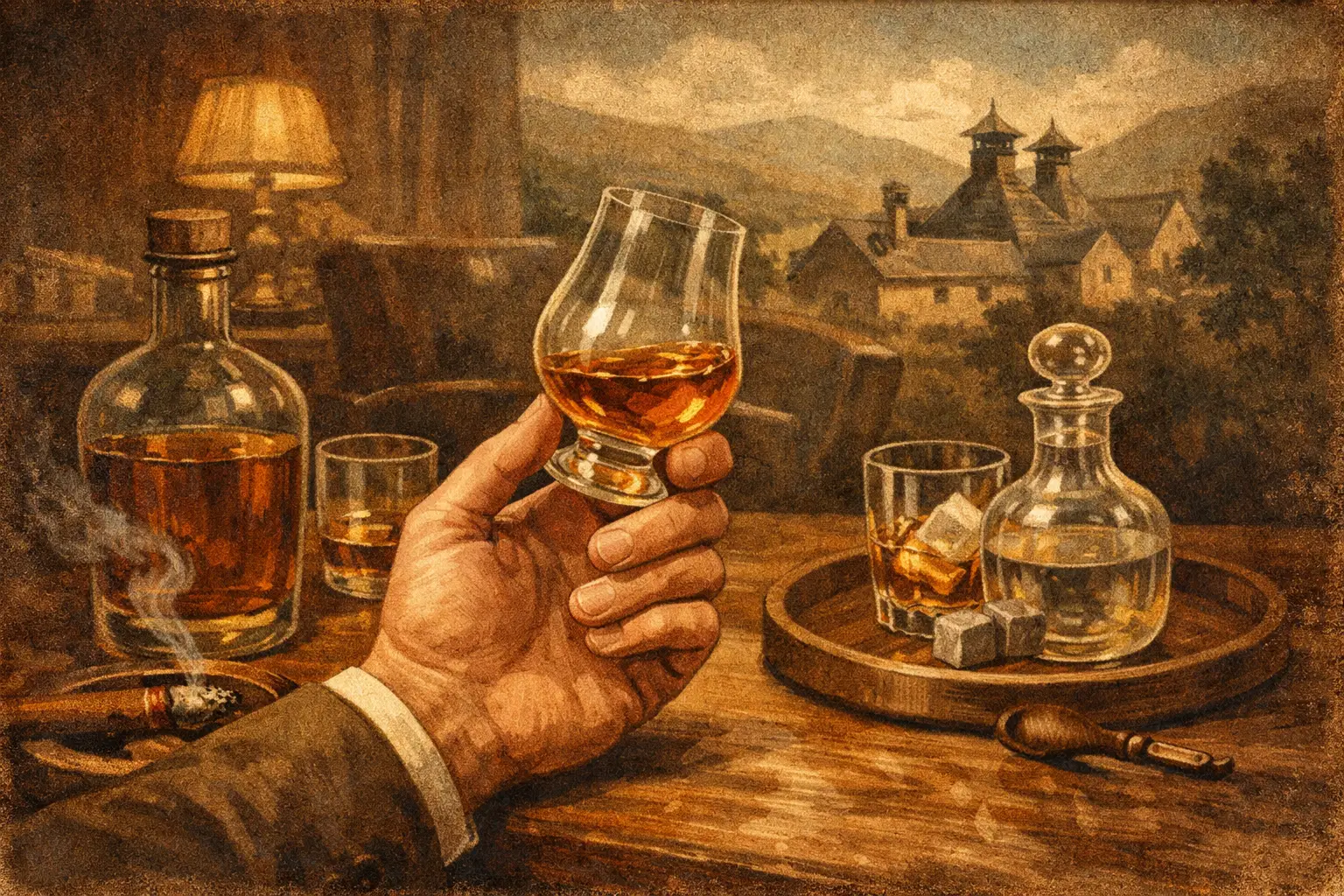
The glass matters more than people expect. A wide tumbler looks the part, but it is not always the best tool for tasting. If you want to pick up aroma properly, use a tulip-shaped whisky glass or a Glencairn. The narrower rim helps concentrate the scent, which is half the experience.
A tumbler is perfectly acceptable for casual drinking, especially in a pub setting where comfort matters as much as precision. But if the goal is to understand the dram, a shaped glass gives you more to work with. You will smell more fruit, spice, smoke, oak, and those small details that make one malt feel elegant and another feel like a boot to the chest.
The point is not to be precious. It is to give the whisky a fighting chance.
Pour less than you think you need
A proper pour for tasting does not need to be generous. In fact, smaller is better. Around 25ml is enough to nose, sip, and explore without rushing.
Fill the glass too high and you lose control of the aroma. You also make it easier to drink quickly, which defeats the purpose. Single malt rewards pace. It changes in the glass over a few minutes, especially if it has decent age, cask influence, or a bit of strength behind it.
That first pour should invite attention, not a sprint.
Nose before you sip
This is where beginners often skip ahead, and it is where a lot of the pleasure lives. Bring the glass to your nose gently. Do not jam your face into it and inhale like you are checking whether the building is on fire.
Keep your mouth slightly open and take short, light sniffs. Alcohol can be sharp at first, especially in cask strength whiskies, and a softer approach helps you get past the sting. Move the glass a little from side to side. You may notice vanilla, dried fruit, honey, pepper, orchard fruit, sea salt, heather, bonfire smoke, or something far less poetic but equally real, like old leather or polished wood.
There is no medal for naming every note correctly. If it smells like apples to you, then apples it is. The goal is to pay attention, not to impress the room.
Take a small first sip
The first sip should be modest. Let it coat your tongue and sit there for a moment before you swallow. This wakes up your palate and gives you a sense of the whisky's texture as well as its flavour.
Some single malts arrive soft and sweet, with notes of toffee, malt loaf, or stone fruit. Others open dry, peppery, smoky, or medicinal. Some are silky and easy. Others come in hard and hot, particularly if they are bottled at higher strength. None of this is bad. It simply tells you what sort of dram you are dealing with.
Your second sip is usually the one that reveals the whisky more clearly. By then, your palate has adjusted, and the flavours tend to open out. That is often the moment people realise why single malt has such loyal followers.
Should you add water?
Yes, sometimes. No, not always.
A few drops of water can transform a whisky, especially one with a higher ABV. It can release aroma, soften the alcohol, and bring hidden flavours into view. A smoky whisky may become sweeter. A sherried whisky may show more fruit. A hot, punchy dram may settle into something far more balanced.
But water is not a universal upgrade. Add too much and you flatten the whisky, washing out the structure that made it interesting in the first place. The best approach is cautious. Taste it neat first, then add a few drops, swirl gently, and taste again.
If it improves, carry on carefully. If it loses its edge, stop there. This is one of those areas where preference matters, but so does restraint.
What about ice?
Ice is not a crime. It is just a trade-off.
If you want a cold, easy whisky after a long day, go ahead. A cube or two can make a strong dram more relaxed and approachable. For some people, that is the difference between enjoying whisky and merely enduring it.
The downside is that cold suppresses aroma and flavour. That means less complexity, less nuance, and less of the character you are paying for. If you are trying a single malt for the first time, ice is usually not the best starting point. Taste it neat first. Then decide whether you want to chill it.
Large cubes are better than a handful of small ones because they melt more slowly and dilute the whisky less aggressively. If you want the cooling effect without a flood of water, that matters.
How to drink single malt whisky at your own pace
Single malt is not built for speed. It opens slowly, changes in the glass, and leaves a finish that tells you almost as much as the first sip. If you knock it back like a cheap shot, you miss the whole point.
Take a sip, set the glass down, and give it a minute. Notice what lingers. Is it smoke, spice, sweetness, oak, citrus, pepper? Does it vanish quickly or hang around like a good story in a late-night bar?
Drinking slowly also helps if you are comparing drams. A light Speyside can seem delicate and honeyed on its own, then disappear completely after an Islay bruiser. Order matters. Start with lighter, gentler whiskies and build towards richer, smokier, heavier styles if you are tasting more than one.
That is not snobbery. It is simple survival for your palate.
Food, mood and setting matter more than whisky snobs admit
What you have eaten, how tired you are, the noise in the room, and even the company you keep can change how a whisky tastes. A peaty malt before dinner may feel thrilling. The same dram after a heavy meal might seem dull or overly medicinal.
Good single malt benefits from the right setting - somewhere comfortable, somewhere you can actually taste what is in front of you, somewhere with enough atmosphere to make the moment feel worth having. That is one reason whisky bars with character tend to beat lifeless hotel lounges every time. If you happen to find yourself in Riga and want to put theory into practice, The Armoury Bar gives you the right sort of backdrop - strong pours, proper atmosphere, and enough visual firepower on the walls to make the dram feel like part of the mission.
Still, the best setting is simply one that lets you pay attention. Whisky is social, but it does not enjoy chaos.
Common mistakes worth avoiding
The biggest mistake is pretending. People often force themselves to like whatever they think they are supposed to admire. If a heavily peated malt tastes like a seaside bonfire in a medicine cabinet and you hate it, that is useful information. Drink something else.
Another mistake is flooding every dram with mixer or ice before tasting it properly. You can always add. You cannot subtract.
And finally, do not chase tasting notes too hard. If someone says a whisky has hints of treacle, cigar box, and burnt orange peel, fine. If you get malt, smoke, and warmth, also fine. Whisky should sharpen your senses, not send you into creative writing under pressure.
The best way to learn is by repetition. Try different regions. Compare cask styles. Notice what you return to. Your palate becomes better trained not through memorising jargon, but through drinking attentively and often enough to spot the differences.
Single malt is one of the few drinks that rewards both confidence and humility. Pour it neatly, nose it gently, sip it slowly, and adjust only after you know what is there. The dram does not need ceremony for its own sake. It just needs a steady hand and a bit of respect.


Comments