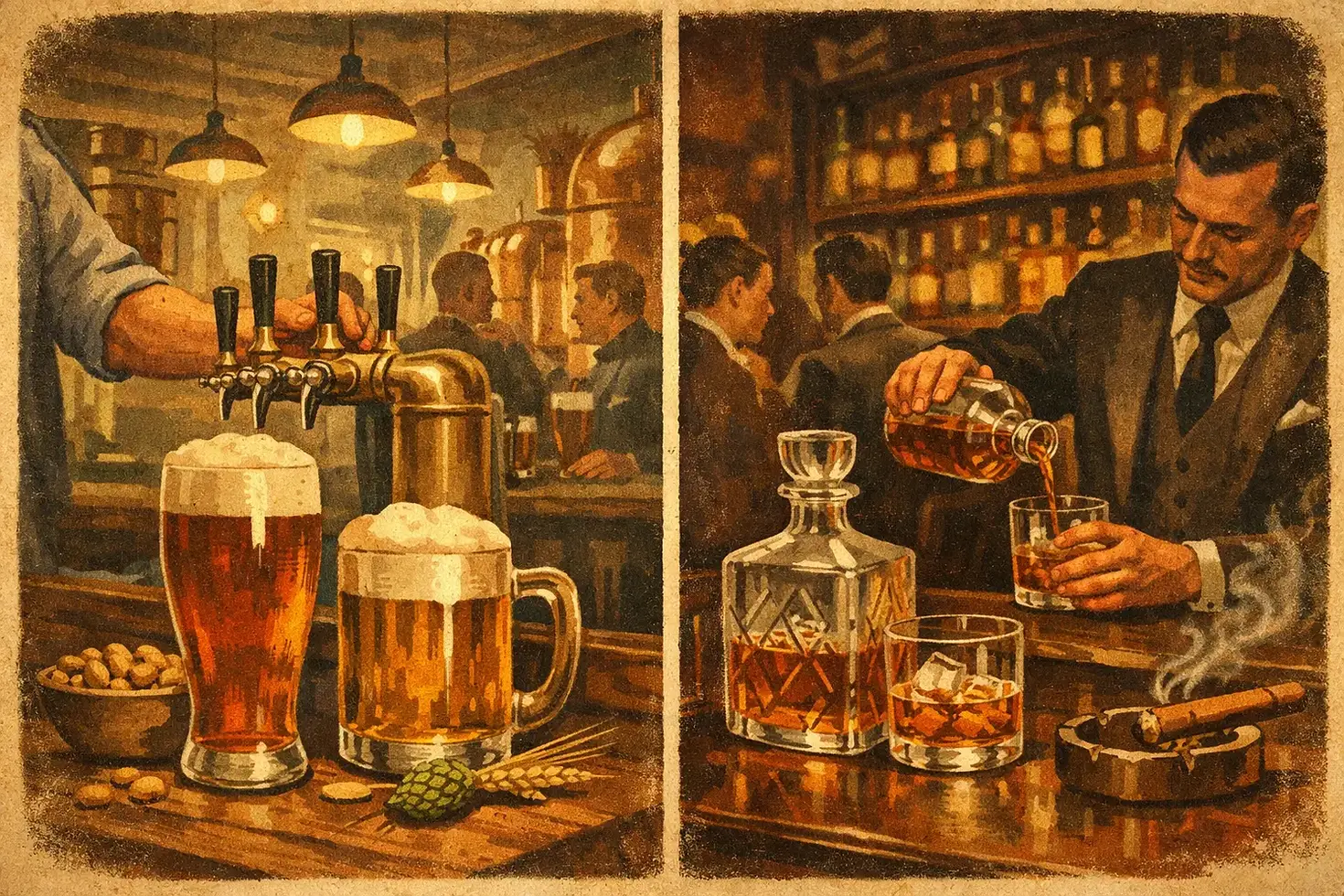
Craft Beer Versus Whisky Bar for Your Night Out

Riga Old Town has a particular way of testing a group’s resolve. One friend wants a sharp, hoppy pint. Another wants to settle into a leather-seat conversation with a proper dram. Someone else simply wants sport on the screen, good company and a venue worth talking about afterwards. The craft beer versus whisky bar question is less about choosing a side than choosing the kind of night you intend to have.
A beer-led bar brings pace, variety and easy-going discovery. A whisky-led bar invites you to slow down, compare flavours and give the evening a little more ceremony. Put them together in the right room and nobody has to retreat early or pretend they are enjoying a drink that is not their style.
Craft beer versus whisky bar: start with the occasion
The first mistake is treating beer and whisky as rival armies. They serve different missions. Craft beer is built for sociability: a fresh pint arrives quickly, works brilliantly across a long conversation and gives everyone an accessible place to begin. Whisky is more deliberate. It rewards curiosity, turns ordering into part of the entertainment and can make a quieter catch-up feel like an occasion.
If you are meeting new people, beginning a big Friday night or watching the match, craft beer usually has the tactical advantage. There is little pressure around the first order. A pale ale, lager or stout gives the table something familiar to rally around, while a more unusual brew can start a conversation without requiring a lecture on tasting notes.
For birthdays, visiting friends, post-dinner drinks or a night when the aim is to linger rather than charge ahead, whisky tends to take command. A single malt has presence. It asks for a moment of attention: the aroma, the first sip, the difference between a soft honeyed pour and something smoky enough to feel like a campfire in a glass.
The strongest nights leave room for both. Start with beer while the group gathers and the stories get louder. Move to whisky when the pace settles. That is not indecision. That is good planning.
What a craft beer bar does best
Craft beer earns its place because it has range without formality. The same menu can cover a crisp pilsner for the traditionalist, a citrus-led IPA for the hop hunter, a dark porter for the colder months and a low-alcohol option for the person pacing themselves. A group with mixed tastes can stay together rather than splintering off in search of different bars.
Beer is also naturally social. Pints do not demand a special occasion or a perfectly quiet table. They suit laughter over table football, a big game on screen, a spontaneous second round and the kind of international crowd that forms easily in Riga. For travellers and expats, asking what someone is drinking remains one of the simplest opening lines in any pub.
There is a practical side too. Beer generally offers a gentler route through a long evening, particularly when food is involved. A bitter, lager or wheat beer can cut through salty pub snacks and richer plates without stealing every bit of attention. It is a drink with enough character to be interesting, but often enough refreshment to keep the night moving.
That said, a craft beer bar can become a maze if choice replaces judgement. Twenty taps are not automatically better than a well-chosen selection. The best venues give drinkers a clear route: something light, something hoppy, something dark, something surprising. You should feel encouraged to try, not as though you need a map and a degree in brewing science before ordering.
Choose beer when the night needs momentum
Craft beer is the obvious call when the group is large, the evening has no fixed script or people are arriving at different times. It is also the safer option when some guests are new to whisky, driving later or simply after a cold, uncomplicated pint. Not every mission requires a ceremonial sword. Sometimes a well-kept beer gets the job done.
Why a whisky bar changes the mood
A whisky bar makes the drink part of the setting. The bottle choice, the glass, the light and the conversation all matter more. This is where a night can shift from casual drinking to proper ritual, without becoming stiff or precious about it.
Whisky offers a remarkable spectrum. One dram may bring orchard fruit, vanilla and warm spice; another can be oily, maritime and full of smoke. Irish whiskey often leans smooth and approachable, while bourbon brings sweeter notes of oak and caramel. Scotch alone can carry a drinker from delicate Highland character to the peat-heavy drama many people either love instantly or spend a few attempts learning to respect.
That range is why whisky works so well for people who enjoy a story with their drink. A bartender can point a newcomer towards an easy first pour or give an experienced drinker something they have not tried before. The measure is smaller than a pint, but the experience often lasts longer. It creates space for a proper chat rather than another rushed round.
Whisky does have trade-offs. It costs more per serve, its strength deserves respect and its flavours can be intense. A heavily peated malt is a poor opening move for someone who normally drinks lager. Likewise, adding a dash of water is not a breach of warrior code. It can open up a whisky, soften the alcohol and reveal flavours that were hiding behind the first hit.
Choose whisky when detail matters
Go for whisky when your group appreciates the slower side of a night out, when you want to mark an occasion, or when the bar itself should be part of the memory. It is especially good after dinner, on a cold Riga evening or when the conversation has graduated beyond the usual first-round banter.
The real winner is a bar that can handle both
The most useful answer to the craft beer versus whisky bar debate is a venue that does not force the choice. A friend can order a global craft beer while another explores single malts. Nobody has to compromise their evening just to keep the group together.
That flexibility is what makes a proper pub-bar hybrid more than a drinks list. You can come in from the Old Town streets for a casual pint on the terrace, settle inside for sport and table football, then decide the night deserves a whisky worth discussing. The atmosphere should support the change of gear rather than making it feel like you have entered the wrong room.
At The Armoury Bar, the experience comes with a little theatrical firepower. The weapons and military memorabilia create a setting that is deliberately bolder than the average pub, but the point is not to take drinking too seriously. It is to give the table something to notice before the first round arrives. Premium spirits, craft beers and a room with genuine character make an easy base for mixed groups of locals, visitors and people who met five minutes ago.
A themed venue only works when the welcome remains warm. The best kind of bold bar has enough edge to feel memorable, yet enough pub comfort that a solo traveller can sit with a pint, a couple can share a dram, and a group can claim a table without feeling they are attending a costume party.
Build a better round for the whole table
If your group cannot decide, do not ask everyone to make one grand final choice at the door. Let the evening develop. Begin with beer for the first round, particularly if people are hungry or still arriving. Once everyone has settled, ask who is curious about a whisky and order a few contrasting drams across the table. Keep the comparison simple: one lighter and fruitier, one richer and oakier, perhaps one smoky option for the brave.
There is no need to turn this into a tasting exam. Smell the whisky before sipping it. Take small sips. Talk about what it reminds you of, even if the answer is simply “Christmas cake” or “a bonfire after rain”. With beer, compare texture as well as bitterness. A stout, lager and IPA can feel like entirely different drinks even before flavour enters the argument.
The sensible rule is to match the drink to the pace, not to anyone’s image of what they should order. A great pint is not less sophisticated than a great dram. A whisky neat is not automatically the right call for every palate. Confidence is choosing what suits the moment.
When the group is ready to plan its Riga night, pick the venue that lets the lager loyalist, the IPA scout and the single-malt strategist sit at the same table. Reserve enough space, order the first round without overthinking it, and let the night decide whether it needs another pint or a final dram.


Comments